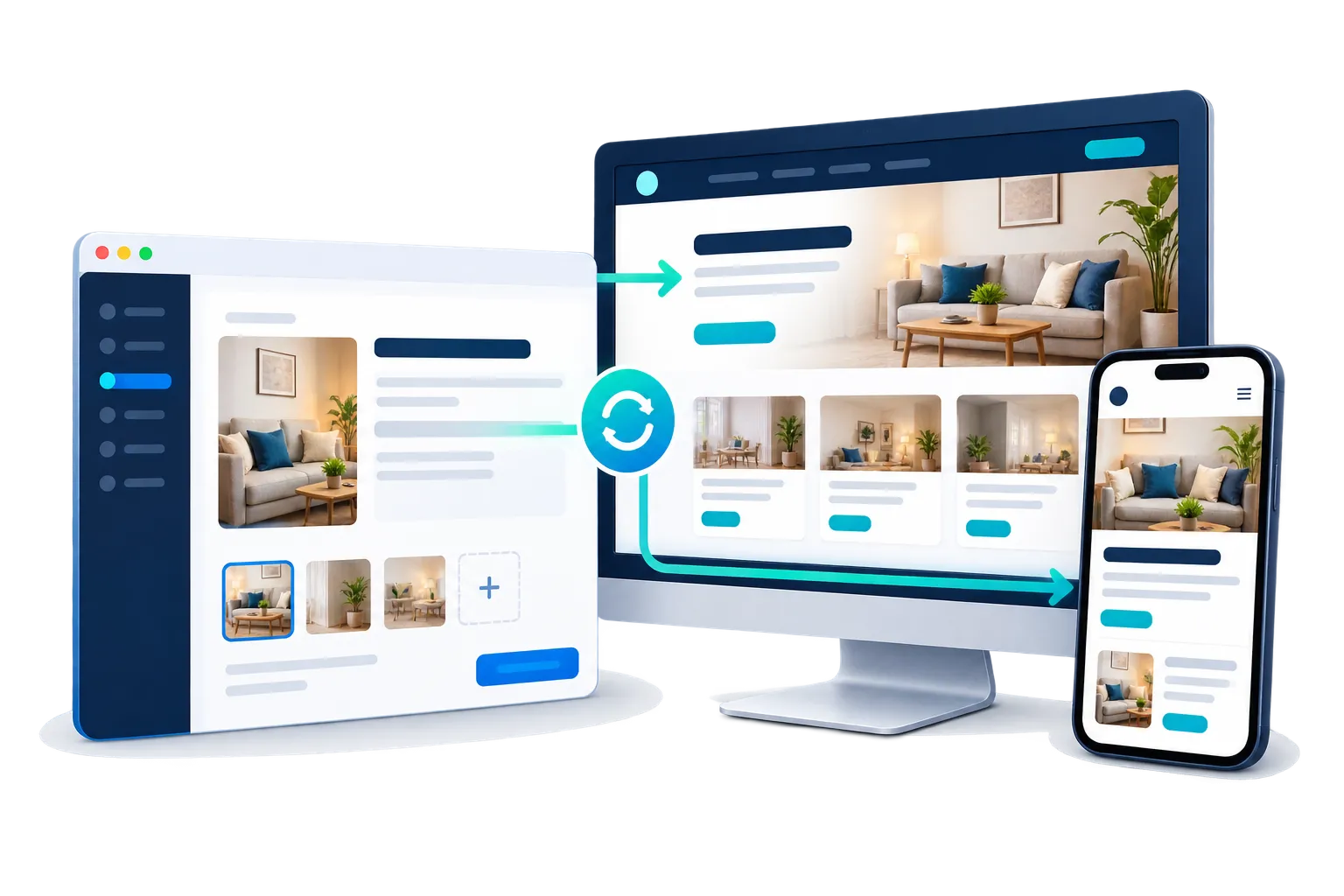
A business website can look polished on launch day and still lose value later if the information on it no longer matches the business. Dynamic website development gives the website a structured content system behind the visible pages, so authorised users can keep permitted information current without editing code or turning routine changes into new page-development work.
SiteSeas is a dynamic business website platform built around structured content, reusable components and controlled editing. Your team can update permitted business information through the admin panel while the website’s layout and presentation remain consistent.
Static and dynamic describe how website information is maintained; they do not decide whether a website looks professional. The practical difference appears when the business needs to change what visitors see.
A static website is built around relatively fixed page content. When information changes, the update is commonly made by editing the page or its files rather than by managing that information through a content system.
A dynamic website separates supported business content from the page code. Authorised users can update that information through a system, and the website displays the revised content through its existing structure.
The value of a dynamic website becomes obvious when ordinary business information changes over time.
Add, revise or remove permitted service or product information as offerings change, instead of leaving visitors with an old catalogue of what the business used to provide.
Keep permitted team profiles, branch details, facilities, specialties or other supported business information aligned as the organisation changes.
Refresh supported images, galleries, videos, testimonials, certifications and other proof so visitors see current evidence rather than an outdated snapshot.
Publish supported notices, news and other time-sensitive information when relevant, helping returning visitors see what is current now.
Website content management can cover much more than editing paragraphs. SiteSeas can present supported business information through reusable components and visual structures that make content easier to scan.
Present supported services, products, categories, highlights or other structured information in compact visual groups that visitors can scan quickly.
Organise related information in a compact structure so detailed content can stay readable without forcing every topic into a long page.
Use supported image albums, galleries and embedded video to keep visual proof, facilities, work examples or other business media current.
Use the same supported component on several pages where appropriate instead of recreating similar content blocks separately.
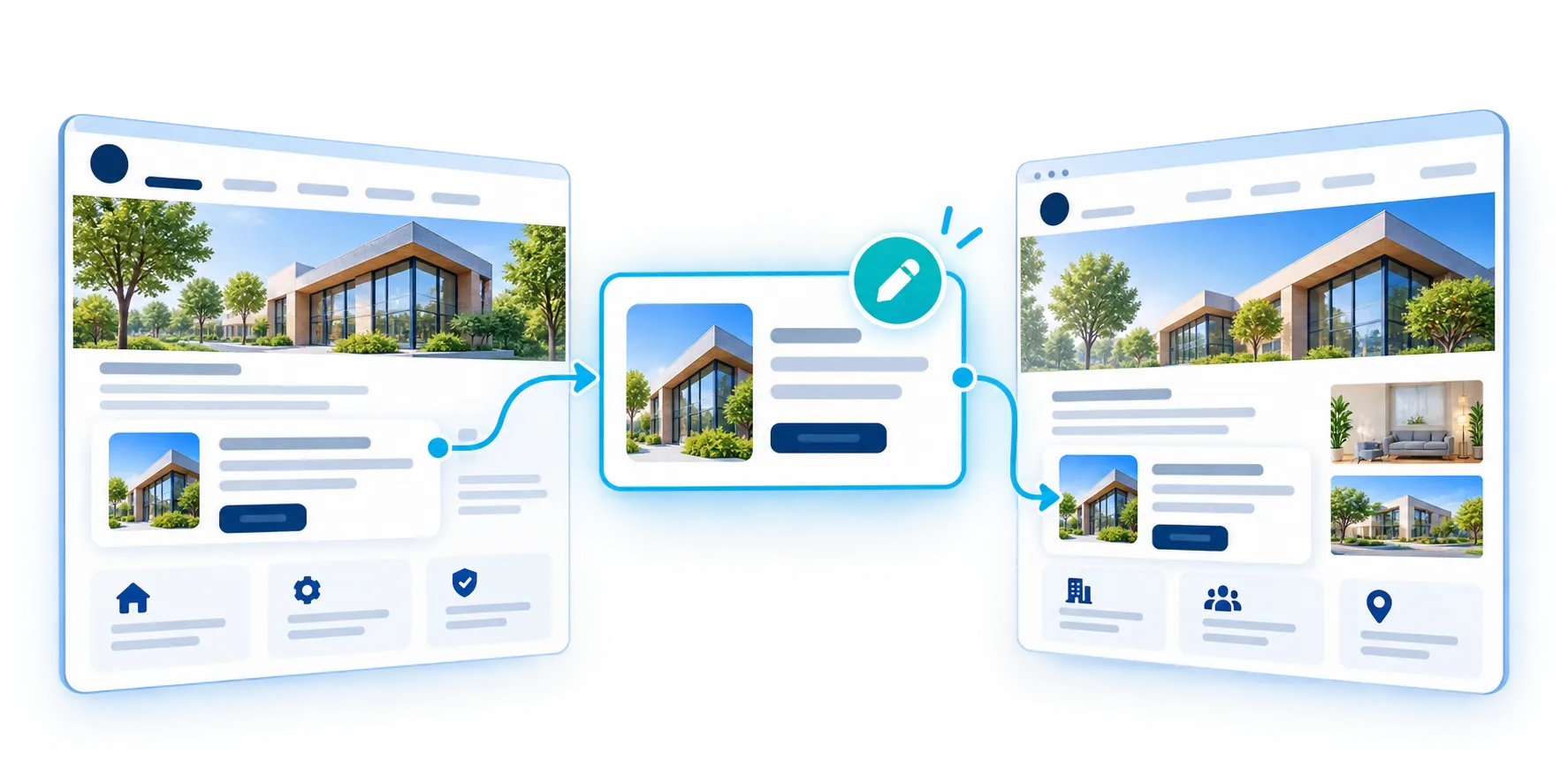
SiteSeas components can be bound to multiple supported pages. When shared component content is updated, every page using that same component is updated with it. This reduces duplicate editing and helps keep repeated business information consistent.
A shared block used across several pages therefore does not need a separate manual edit on every page.
For many buyers, the real goal behind CMS website development is straightforward: make website content management practical for the business team without requiring them to work with page layout or code for routine updates.
Authorised users can edit permitted content through structured admin controls. The business can change the information it owns without needing to work inside code.
Layout, placement and system structure remain controlled. This helps the website stay visually consistent as information changes instead of making every content edit a redesign decision.
Visitors use a business website to understand what the business offers now. Current services, team information, facilities, proof, notices and contact details help them evaluate the business accurately.
Keeping useful content current can also support search relevance. The technical SEO foundation is covered separately on the SEO-Friendly Websites page.
On supported pages, components and elements, configured SiteSeas enquiry paths can preserve validated source context with the enquiry.
If someone enquires from a specific service, product or supported content element, your team can receive more context about what interested that visitor. See the Smart Enquiry System for the complete enquiry flow.
A dynamic website manages supported content through a system rather than treating all visible information as fixed page content. Authorised users can update permitted information through structured controls, while the website continues displaying it through the existing design.
A static website is built around relatively fixed page content, while a dynamic website lets supported information be managed through a content system. The practical advantage appears when services, products, people, media or other business information changes over time.
Yes. Authorised users can update permitted content through structured SiteSeas admin controls without editing the underlying code.
Depending on the selected design, supported structures and purchased scope, permitted content can include services, products, team details, branches, facilities, images, galleries, videos, notices, news, testimonials and other supported business information.
Yes, supported components can be bound to multiple pages. When the shared component content is updated, the pages using that component are updated with it.
A dynamic website development company should give the business a practical way to keep important information current, organise content clearly, preserve presentation consistency and avoid making routine updates dependent on code.
For buyers comparing CMS website development services, SiteSeas addresses the core need through structured admin controls, reusable components and controlled presentation. Authorised users can update permitted content while the layout and system structure remain consistent.
A dynamic structure makes it easier to keep relevant business content current, which can support search relevance. Technical search readiness, content quality, competition and authority also matter; the dedicated SEO-Friendly Websites page explains that search foundation in detail.
Where configured, supported pages, components and elements can expose enquiry paths that preserve validated source context. This can give the business more information about what the visitor was viewing when the enquiry was submitted.
SiteSeas uses a controlled dynamic model: authorised users manage permitted content through structured admin controls, while layout and system structure remain managed. This keeps routine content changes from becoming page-design work.
If your services, products, team, media or other business information will evolve after launch, SiteSeas gives you a structured way to keep permitted content current, present it through rich components and connect relevant content to enquiry paths where configured.